

Competitive intelligence is in its strongest position yet. Adoption, win rates, and proven revenue impact are all at record highs. But the results aren't shared evenly. Some programs turn competitive intelligence into real revenue; others do a lot of good work without ever moving the number.
What separates them isn't a secret, or out of reach. It's a specific set of choices, and this year's data makes them clear. The 2026 State of Competitive Intelligence is live: our ninth edition and the longest-running benchmark in the field, built on a survey of hundreds of CI and revenue leaders. Here's what the programs pulling ahead do, and where to start. Read it here.
The bar has moved
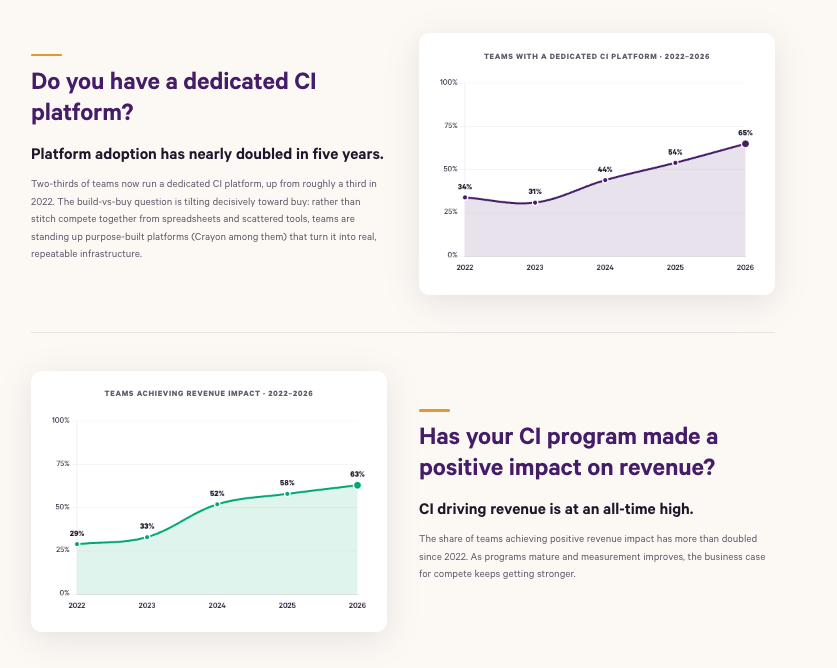
Competitive intelligence has gone mainstream: two-thirds of teams now run on a dedicated platform. But competition has intensified right alongside it. For most teams, the majority of deals are now competitive, and buyers arrive better informed than ever, while rep readiness hasn't kept pace. That gap, between how competitive selling has become and how ready teams are, is the opportunity. The programs that close it pull ahead.
What the best programs do differently
The teams driving the most revenue aren't doing dozens of things better. They're doing a few consistently. Three patterns stand out:
- They get intel to sales on a weekly clock. Cadence is one of the strongest predictors of revenue impact in the survey, ahead of tooling or polish.
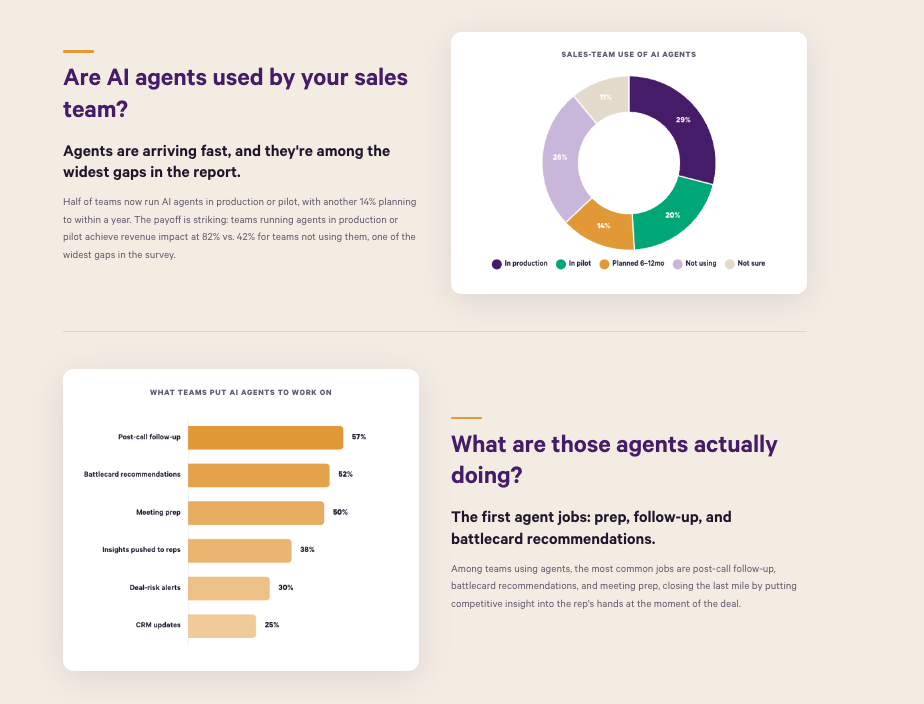
- They put AI to work inside live deals. Creating content with AI is table stakes now; the teams pulling ahead moved it into the deal itself, prepping reps in the moment, and they're nearly twice as likely to see revenue impact.
- They've built the right foundation. A tracked metric, a dedicated platform, and an executive sponsor in sales turn up together again and again, making a team 3.6× as likely to drive revenue.
How to close the gap
None of it requires a reinvention. The report's final chapter ranks the practices most tied to revenue, and the highest-impact ones are within reach of almost any team:
- Tie your program to a revenue metric. Competitive win rate is the usual starting point, and measurement is what proves a program's value instead of assuming it.
- Get an executive sponsor in sales. It's the most common gap in the report, and the teams that have one pull ahead on nearly every outcome.
- Put intel on a weekly clock. Get competitive updates to sellers every week, in the tools they already use.
- Move AI into the deal. Beyond generating content, put it to work prepping reps and surfacing intel in live opportunities.
- Make it repeatable. Run the program on a dedicated system so the work compounds instead of scattering.
The bottom line
Here's the exciting part: none of this is reserved for the biggest teams. The programs pulling ahead made a handful of deliberate choices, and you can start making them this quarter.
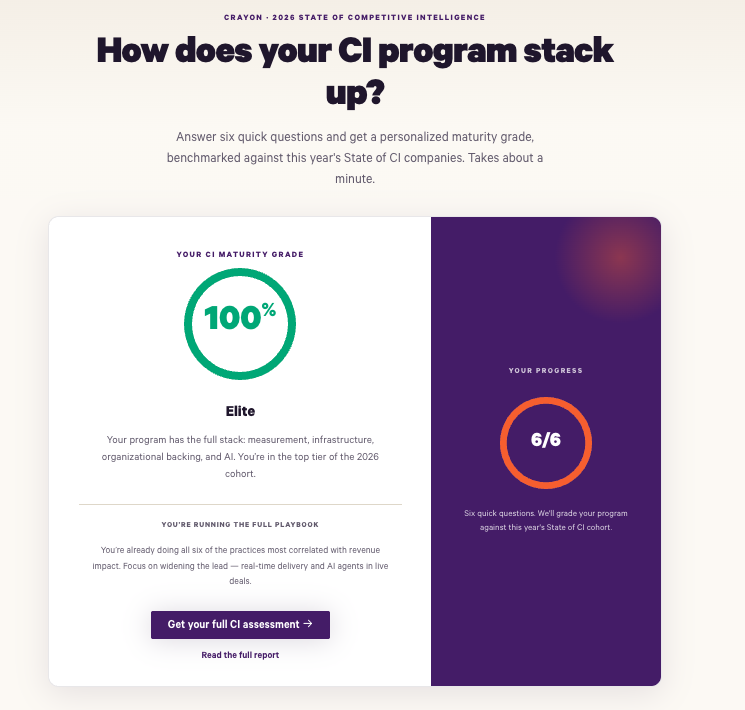
The full 2026 State of Competitive Intelligence has the whole picture: the data behind every finding and a ranked blueprint for where to focus first. It also comes with a one-minute grader that scores your program against this year's cohort and points you to your highest-impact next move. Read it, run your grade, and walk away with a plan.


Seeing is believing! Check out Crayon for yourself.

Popular Posts
-
 Sales Battlecards 101: How to Help Your Sellers Leave the Competition In the Dust
-
 How to Create a Competitive Matrix (Step-by-Step Guide With Examples + Free Templates)
-
 The 8 Free Market Research Tools and Resources You Need to Know
-
 6 Competitive Advantage Examples From the Real World
-
 Crayon Launches First Competitive Intelligence MCP Server